


NewsDetails
Industrial Filter Cloth for Dust Collectors: How to Choose from a Manufacturer's Perspective
author:Yiheng time:2026-07-24 18:12:06 click:135
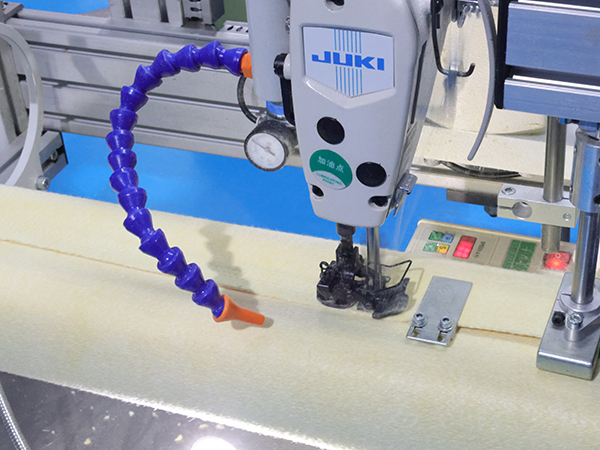
Walk into almost any factory handling bulk powders — cement, grain, minerals, chemicals — and you will find a dust collector running. At the core of that system sits industrial filter cloth for dust collectors, the replaceable medium that determines whether the system meets emission limits, keeps pressure drop manageable, and avoids unscheduled downtime. This article presents what a reliable supplier of industrial filter cloth for dust collectors would tell you before you place your order — practical selection logic rather than theoretical comparisons.
What Industrial Filter Cloth for Dust Collectors Must Do
Every baghouse, cartridge collector, or dust bin vent relies on industrial filter cloth for dust collectors to capture airborne particulate at the required efficiency while allowing enough airflow for the system to function. A well-chosen industrial filter cloth for dust collectors balances four performance axes: filtration efficiency (the percentage of particles stopped), air permeability (how freely air passes through), dust release (how well the cake falls off during cleaning), and mechanical endurance (how many cleaning cycles the fabric survives before it wears out).
Factories that push their industrial filter cloth for dust collectors past the rated temperature or gas chemistry often regret it within months. The responsible supplier provides clear operating boundaries and expects the buyer to monitor conditions at the collector inlet.
Filter Cloth Constructions Available from Manufacturers
Suppliers of industrial filter cloth for dust collectors typically offer three primary constructions, each suited to different dust loads and cleaning methods:
Needle felt. Needle-punched fibers form a thick, random matrix that traps dust throughout its depth. This is the most common construction for pulse-jet baghouses because the felt structure holds dust efficiently and releases it during cleaning. A reputable manufacturer of industrial filter cloth for dust collectors will offer single and multi-layer needle felt with weights from 350 to 800 g/m² depending on the application.
Woven filter cloth. Monofilament or multifilament yarns woven into plain or twill patterns. Woven media is thinner and smoother than felt, which makes cake release easier, but its filtration efficiency depends more on building a stable dust cake on the surface. It suits shaker and reverse-air collectors where gentle cleaning preserves the cake structure.
Membrane-laminated filter cloth. A microporous PTFE membrane bonded to a needle felt substrate. The membrane does the actual filtration at the surface, while the felt provides mechanical support. This construction achieves the lowest emission levels, typically below 5 mg/Nm³, and is the go-to choice when regulatory limits are tight and the dust is fine or sticky.
Temperature and Chemistry: The Two Non-Negotiable Specifications
Before any other selection decision, the factory engineer must determine the maximum continuous temperature and the chemical composition of the gas stream. Every supplier of industrial filter cloth for dust collectors maintains a material selection chart, but the user should understand the logic.
Below 130°C with neutral chemistry, standard polyester needle felt is the most cost-effective industrial filter cloth for dust collectors. Above 130°C, the material options narrow to aramid (up to 200°C), PPS (up to 190°C with acid resistance), P84 polyimide (up to 240°C), and fiberglass or PTFE (up to 260°C).
Moisture is often overlooked. If the gas stream is humid and the temperature can drop below the dew point, industrial filter cloth for dust collectors made of aramid will suffer hydrolysis and fail prematurely. In such conditions a hydrolysis-resistant material like PPS, P84, or PTFE-laminated media is the safer choice.
Matching Filter Cloth to Dust Characteristics
The physical properties of the dust itself shape the selection. Fine dust below 10 μm requires higher efficiency media; coarse dust above 100 μm can be handled by coarser weaves or lighter felts. Sticky dust — common in food processing, asphalt plants, and some chemical operations — demands media with good cake release properties. A PTFE membrane or a singed and calendered surface finish on industrial filter cloth for dust collectors helps the cake detach cleanly during pulse cleaning.
Abrasive dust, such as silica, sand, or metal oxides, wears down the fabric over time. Heavier felt (500 g/m² or more) and fabrics with reinforcing scrim provide extra resistance. The manufacturer should provide abrasion test data and reference installations for similar applications.
Explosive dust, including grain flour, coal dust, and metal powders, requires antistatic industrial filter cloth for dust collectors with conductive fibers. Standard polyester can build static charges that ignite the dust cloud. A responsible supplier will ask about dust explosibility before quoting media.
Factory-Level Considerations for Procurement
Procuring industrial filter cloth for dust collectors is not just about the fabric. Experienced manufacturers and suppliers know that consistency matters more than the absolute performance of a single test sample. The buyer should ask three things: Can the supplier provide batch-level test reports for permeability, tensile strength, and thickness? Does the supplier manufacture in a controlled environment with documented quality procedures? Are reference installations available in the same industry?
Lead time is another practical factor. Standard polyester needle felt can be delivered in two to three weeks from most manufacturers, but specialty media such as PTFE-laminated fiberglass may require six to eight weeks. Factories with critical compliance deadlines should plan their filter cloth orders accordingly and maintain a spare set of bags for the most heavily loaded compartments.
Common Mistakes in Selecting Dust Collector Filter Cloth
Manufacturers of industrial filter cloth for dust collectors see the same mistakes repeatedly. The most frequent is over-specifying the temperature rating without checking the actual gas conditions at the collector inlet. Another is choosing media purely on initial cost per square meter without considering service life — a cheaper fabric that needs replacement twice as often costs more in labor and downtime. A third mistake is ignoring the cage condition. Even the best industrial filter cloth for dust collectors fails prematurely when installed on corroded or poorly coated cages. The supplier can recommend cage specifications that match the fabric choice.
FAQ
What is the best industrial filter cloth for dust collectors handling fine silica dust?
For fine silica dust below 5 μm, needle felt industrial filter cloth for dust collectors with a PTFE membrane surface is recommended. The membrane captures fine particles at the surface and prevents them from embedding in the felt structure, which would cause a rapid rise in pressure drop. A singed and calendered finish on the felt side further improves dust release.
Can the same filter cloth be used for different dust types in the same factory?
In most cases no. Each dust type has different particle size distribution, moisture content, abrasiveness, and chemical reactivity. A manufacturer of industrial filter cloth for dust collectors will typically recommend different media for a cement plant versus a food processing facility. Within a single factory, different compartments handling different process exhausts may also require different specifications.
How often should industrial filter cloth for dust collectors be replaced?
Service life ranges from one to five years depending on operating conditions. Temperature, dust loading, cleaning frequency, and chemical exposure all influence replacement intervals. A reputable supplier of industrial filter cloth for dust collectors will provide a service life estimate based on reference installations. The factory should track pressure drop trends and schedule replacement when it reaches twice the initial reading or when emission monitoring shows breakthrough.
What surface treatments improve the performance of industrial filter cloth?
Common treatments include singeing and calendering (smooths the surface for better cake release), PTFE dip coating (adds chemical resistance and release properties), antistatic treatment (conductive fibers for explosive dust), and PTFE membrane lamination (surface filtration for ultra-low emissions). A knowledgeable manufacturer will match the treatment to the specific dust and gas conditions.
Conclusion
Selecting industrial filter cloth for dust collectors does not need to be complicated, but it does require the factory engineer to understand the actual operating conditions — temperature, chemistry, moisture, dust characteristics, and cleaning method — before approaching suppliers. The most cost-effective choice is rarely the cheapest per square meter; it is the media that delivers the required emission performance over the longest service life under the real conditions of the application. Working with an experienced manufacturer of industrial filter cloth for dust collectors who asks the right questions and provides documented product data will save far more than it costs in the long run.
References
European IPPC Bureau. (2017). Best Available Techniques Reference Document for Large Combustion Plants. Publications Office of the European Union.
Brown, R. C. (2018). Air Filtration: An Integrated Approach to the Theory and Applications of Fibrous Filters. Second Edition. Elsevier.
ISO 16890-1. (2016). Air Filters for General Ventilation — Determination of the Filtration Performance. International Organization for Standardization.
Zhang, L. and Chen, W. (2020). Performance of needle felt filter media under simulated baghouse conditions. Filtration and Separation, 57(3), 28–35.
Graver, D. R. (2019). Filters and Filtration Handbook. Sixth Edition. Butterworth-Heinemann.
 Recommended Products


 Contact Us
—— Hotline:+86 15028642444
—— Email:523474198@qq.com
—— Whatsapp:+8615028642444
—— Address:Longfengdian Village, Waliwang Town, Botou City, Hebei Province


