


NewsDetails
Dust Filter Cloth for Cement and Mining Applications
author:Yiheng time:2026-06-12 08:26:15 click:130
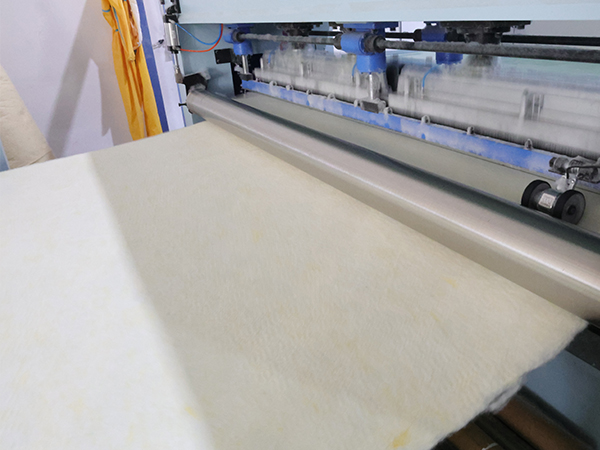
Cement manufacturing and mining are among the most dust-intensive industries on the planet. From raw material crushing to clinker cooling and ore processing, airborne particulate matter is a constant byproduct. Dust filter cloth serves as the primary filtration medium in baghouse systems, capturing particles before exhaust gases are released into the atmosphere. Without reliable dust filter cloth, plants face regulatory penalties, equipment degradation, and serious health risks for workers.
According to the U.S. Environmental Protection Agency (EPA), cement kilns alone emit over 500,000 tons of particulate matter annually without proper controls. High-performance dust filter cloth can reduce stack emissions to below 10 mg/Nm³, far exceeding most national standards.
Key Properties of High-Performance Dust Filter Cloth
Not all dust filter cloth is created equal. The performance of a filter bag depends on several measurable properties:
Fiber composition — PPS, P84, PTFE, fiberglass, and aramid each offer different temperature and chemical resistance profiles
Permeability — Measured in L/dm²/min at 200 Pa, typically ranging from 100 to 300 for cement applications
Tensile strength — Must withstand pulse-jet cleaning forces; look for >600 N/5cm in warp direction
Operating temperature range — From 130°C for PPS to 260°C for PTFE membranes
Chemical resistance — Acid gas resistance is critical in cement kiln bypass streams
Dust Filter Cloth Applications in Cement Plants
In cement production, dust filter cloth is deployed across multiple process stages:
Kiln and raw mill — PPS or P84 needle felt handles temperatures up to 190°C with moderate acid resistance
Clinker cooler — Aramid felt operates reliably at 200°C with excellent abrasion resistance
Cement mill — Polyester or PPS felt captures fine cement dust at moderate temperatures
Coal mill — Anti-static dust filter cloth with conductive fibers prevents ignition risks
Each application demands a specific dust filter cloth formulation. Selecting the wrong material leads to premature bag failure, with average replacement costs exceeding $50,000 per baghouse changeout.
Dust Filter Cloth in Mining: Tackling Extreme Particulate Loads
Mining operations present unique filtration challenges. Ore crushing, screening, and conveyor transfer points generate massive dust volumes with high silica content. Dust filter cloth in mining must handle:
Abrasive silica and quartz particles that accelerate fabric wear
High moisture content from wet suppression systems
Variable dust loading from 5 to over 50 g/Nm³
Potential explosive atmospheres requiring anti-static treatments
Hydroentangled dust filter cloth with a PTFE membrane laminate is increasingly popular in mining due to its superior dust release properties and extended service life — often 30–40% longer than standard needle felt in abrasive applications.
PTFE Membrane vs. Non-Membrane Dust Filter Cloth
One of the most consequential decisions in dust filter cloth selection is whether to specify a PTFE membrane laminate. Membrane-laminated dust filter cloth achieves surface filtration rather than depth filtration, resulting in:
Lower pressure drop (typically 800–1200 Pa vs. 1500–2500 Pa for non-membrane)
Easier pulse-jet cleaning and reduced compressed air consumption
Emissions below 5 mg/Nm³ without relying on dust cake formation
Longer bag life due to reduced particle penetration into the substrate
The trade-off is cost: membrane-laminated dust filter cloth is typically 40–60% more expensive upfront, but total cost of ownership is often lower due to energy savings and extended replacement intervals.
Selecting the Right Dust Filter Cloth: A Procurement Checklist
For B2B buyers evaluating dust filter cloth suppliers, consider these critical factors:
Process conditions — Map temperature, moisture, and chemical exposure across all operating scenarios
Dust characteristics — Particle size distribution, abrasiveness, and stickiness
Filtration efficiency requirements — Match emission limits to fabric specification
Cleaning system compatibility — Pulse pressure, frequency, and air quality
Total cost of ownership — Factor in energy consumption, bag life, and downtime costs
Certifications — ISO 16890, EN 1822, and local environmental compliance documentation
Supplier track record — Request case studies from similar cement or mining installations
Maintenance Best Practices for Extended Bag Life
Even the best dust filter cloth underperforms without proper maintenance. Plant operators should implement these practices:
Monitor differential pressure trends to detect bag degradation early
Schedule regular visual inspections of bag condition and cage alignment
Optimize pulse-jet cleaning pressure — over-cleaning damages fibers, under-cleaning increases pressure drop
Ensure moisture control in gas streams to prevent blinding and chemical attack
Track bag replacement dates and failure modes for data-driven procurement decisions
Proactive maintenance can extend dust filter cloth life by 20–35%, translating to significant savings in large-scale cement and mining operations.
FAQ
What is the typical lifespan of dust filter cloth in cement kiln applications?
PPS dust filter cloth in cement kiln/raw mill duty typically lasts 3–4 years. P84 and PTFE-based fabrics can reach 5–6 years under optimal conditions. Premature failure is often linked to acid dew point excursions or oxygen spikes above 8%.
Can dust filter cloth handle both high temperature and high moisture?
Yes, but material selection is critical. PTFE membrane on a PPS substrate handles up to 190°C with moisture, while full PTFE dust filter cloth withstands 260°C even in wet conditions. Avoid aramid in high-moisture, high-temperature environments due to hydrolysis risk.
How does dust filter cloth reduce operational costs in mining?
High-efficiency dust filter cloth lowers energy consumption by reducing pressure drop, extends bag change intervals, and minimizes regulatory fines. In large mining operations, these savings can exceed $100,000 annually per baghouse.
Is anti-static dust filter cloth required for all mining applications?
Anti-static dust filter cloth is mandatory in coal handling and any environment where combustible dust is present (NFPA 652 compliance). For non-combustible mineral processing, it is recommended but not always required by code.
Conclusion
Selecting the right dust filter cloth for cement and mining applications is a high-stakes decision that directly impacts emissions compliance, energy costs, and operational uptime. By understanding process conditions, evaluating membrane vs. non-membrane options, and following rigorous procurement and maintenance protocols, plant operators can achieve both regulatory compliance and significant cost savings. Partner with experienced dust filter cloth manufacturers who provide application-specific engineering support — the difference between a 2-year and a 5-year bag life is often a matter of informed material selection.
References
European IPPC Bureau. (2019). Best Available Techniques (BAT) Reference Document for the Production of Cement, Lime and Magnesium Oxide. Publications Office of the European Union.
Brown, R. C. (2018). "Advances in High-Temperature Filtration Media for Industrial Baghouse Systems." Filtration & Separation, 55(4), 28–35.
U.S. EPA. (2020). National Emission Standards for Hazardous Air Pollutants: Cement Manufacturing. 40 CFR Part 63, Subpart LLL.
Mukhopadhyay, A. (2021). "PTFE Membrane Filtration: Performance Benchmarking in Heavy Industry." Journal of Industrial Textiles, 50(8), 1234–1256.
NFPA. (2019). Standard on the Fundamentals of Combustible Dust. NFPA 652. National Fire Protection Association.
 Recommended Products


 Contact Us
—— Hotline:+86 15028642444
—— Email:523474198@qq.com
—— Whatsapp:+8615028642444
—— Address:Longfengdian Village, Waliwang Town, Botou City, Hebei Province


