


NewsDetails
Industrial Filter Cloth Manufacturer Selection Guide for Industrial Filtration Systems
author:Yiheng time:2026-05-20 15:27:36 click:101
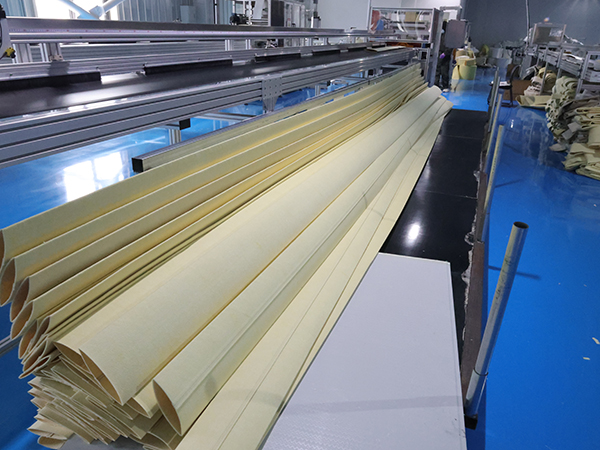
Industrial Filter Cloth Manufacturer: Selection Tips
An Industrial Filter Cloth Manufacturer plays a critical role in solid-liquid separation systems used in mining, chemical processing, wastewater treatment, and food production. The performance of filtration systems depends heavily on fabric structure, fiber composition, and manufacturing precision.
Role of an Industrial Filter Cloth Manufacturer
A professional Industrial Filter Cloth Manufacturer is responsible for producing technical textiles that meet industrial filtration requirements such as particle retention, flow efficiency, and pressure resistance. According to filtration engineering studies, fabric structure directly impacts cake formation and filtration rate. ([filtration journal – Springer/Elsevier references commonly indexed on Google Scholar])
Material Selection Criteria
Filter cloth materials are typically selected based on application requirements. Common materials include polyester, polypropylene, nylon, and PTFE. Each offers different performance characteristics in terms of strength, temperature resistance, and chemical stability.
Filtration Efficiency and Micron Rating
Filtration efficiency depends on pore size distribution and fiber weaving density. A well-engineered cloth from a reliable Industrial Filter Cloth Manufacturer ensures consistent micron retention and stable filtration performance under pressure variation.
Mechanical Strength and Wear Resistance
Industrial filtration environments often involve abrasive slurries. High tensile strength and abrasion resistance are essential to prevent fiber breakage and extend service life.
Chemical Compatibility Considerations
Chemical exposure is a major factor in selecting filter cloth materials. Acidic or alkaline environments require chemically resistant fibers to prevent degradation and maintain filtration integrity.
Production Standards and Quality Control
ISO-based manufacturing systems ensure consistency in fabric thickness, permeability, and tensile strength. Advanced manufacturers use automated weaving and post-treatment processes to improve durability.
Application-Based Selection Strategy
Different industries require different filtration characteristics:
Mining → high abrasion resistance
Chemical → corrosion resistance
Food → hygienic compliance
Wastewater → high flow capacity
Long-Term Cost Evaluation
Although premium filter cloths have higher initial costs, they reduce downtime and replacement frequency, improving total operational efficiency.
Conclusion
Selecting a reliable Industrial Filter Cloth Manufacturer is essential for ensuring filtration efficiency, durability, and operational stability across industrial systems.
References
Ruthven, D.M. (1984), Principles of Adsorption and Adsorption Processes
Tiller, F.M., “Solid-liquid separation theory,” Chemical Engineering Science
Wakeman, R.J. (2007), Solid-Liquid Separation in Chemical Engineering
 Recommended Products


 Contact Us
—— Hotline:+86 15028642444
—— Email:523474198@qq.com
—— Whatsapp:+8615028642444
—— Address:Longfengdian Village, Waliwang Town, Botou City, Hebei Province


