


NewsDetails
Laminated Filter Cloth: Strength and Durability
author:Yiheng time:2026-06-05 16:23:51 click:163
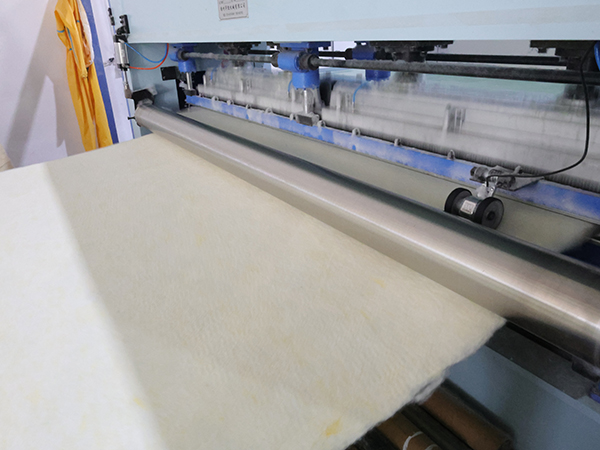
Lamination Technologies and Bonding Methods
The performance of Laminated Filter Cloth depends fundamentally on lamination methods that determine interlayer adhesion, flexibility, and long-term durability. Thermal lamination uses heat and pressure to bond compatible polymer layers without adhesives, creating strong metallurgical bonds between layers. Ultrasonic lamination creates localized melting that bonds layers at specific points, preserving permeability while providing structural integrity for Laminated Filter Cloth applications.
Adhesive lamination offers versatility in combining dissimilar materials that thermal methods cannot join effectively. Polyurethane, acrylic, and epoxy adhesives create bonds between layers with different chemical compositions or melting temperatures. Proper adhesive selection ensures Laminated Filter Cloth maintains bond integrity under operating temperatures, chemical exposures, and mechanical stresses encountered in service.
Enhanced Mechanical Strength and Tensile Properties
Multi-layer construction in Laminated Filter Cloth distributes mechanical stresses across multiple material layers, improving overall strength compared to single-layer media. Tensile strength, tear resistance, and burst pressure capabilities increase substantially with proper lamination design. These enhanced mechanical properties enable Laminated Filter Cloth to withstand higher differential pressures and more aggressive cleaning methods in demanding filtration applications.
Fatigue resistance improvements in Laminated Filter Cloth result from stress distribution that reduces peak stresses in individual layers. Cyclic loading from pulse-jet cleaning, pressure fluctuations, or flow pulsations can cause fatigue failure in single-layer media. The distributed stress state in properly designed Laminated Filter Cloth extends service life in dynamic filtration applications where fatigue dominates failure mechanisms.
Chemical Compatibility and Barrier Properties
Laminated Filter Cloth can incorporate specialized barrier layers that provide chemical resistance exceeding what single materials can achieve. Fluoropolymer barrier layers protect substrate materials from aggressive chemicals, extending service life in corrosive filtration environments. This multi-layer approach enables Laminated Filter Cloth to handle chemical cocktails that would rapidly degrade homogeneous filter media.
Delamination resistance under chemical exposure represents a critical performance parameter for Laminated Filter Cloth in aggressive chemical service. Adhesive selection, surface treatments, and process conditions affect bond durability when exposed to chemicals, temperature, and pressure simultaneously. Accelerated aging tests predict Laminated Filter Cloth long-term performance and help specify appropriate media for specific chemical service conditions.
Filtration Efficiency and Particle Capture Mechanisms
Gradient filtration structures in Laminated Filter Cloth optimize particle capture efficiency while maintaining acceptable pressure drop characteristics. Coarse pre-filter layers remove larger particles, while fine filtration layers capture sub-micron particles that would rapidly blind single-layer media. This graded filtration approach extends Laminated Filter Cloth service life and improves overall filtration system performance.
Surface filtration capabilities in Laminated Filter Cloth systems enable precise particle size cutpoints that traditional depth filtration media cannot achieve. Membrane laminates provide absolute-rated filtration with sharp particle size cutoffs, making them suitable for critical applications like pharmaceutical manufacturing or electronics processing. The combination of surface and depth filtration in Laminated Filter Cloth delivers both precision and dirt-holding capacity.
Permeability and Flow Characteristics
Balancing permeability with filtration efficiency requires careful Laminated Filter Cloth design that considers each layer's contribution to overall flow resistance. Highly permeable support layers maintain structural integrity without excessive flow restriction, while selective filtration layers provide particle capture. Optimizing layer composition and thickness enables Laminated Filter Cloth to achieve target performance parameters across diverse operating conditions.
Pressure drop stability over time distinguishes quality Laminated Filter Cloth from inferior alternatives that blind rapidly or delaminate under operating stresses. Properly designed laminates maintain permeability through multiple cleaning cycles, reducing operating costs and extending service intervals. Monitor Laminated Filter Cloth pressure drop trends to optimize cleaning frequencies and predict replacement intervals accurately.
Temperature Resistance and Thermal Stability
Thermal stability of Laminated Filter Cloth depends on each layer's temperature resistance and the bonding method's thermal limits. High-temperature applications require all layers and adhesives (if used) to withstand operating temperatures without degradation or delamination. Specify Laminated Filter Cloth with verified temperature resistance data to ensure reliable performance in elevated temperature filtration applications.
Thermal cycling resistance affects Laminated Filter Cloth durability in applications with varying operating temperatures. Differential thermal expansion between layers can cause delamination if bonding methods cannot accommodate thermal stresses. Quality Laminated Filter Cloth incorporates compatible materials and bonding techniques that withstand thermal cycling without performance degradation or premature failure.
Installation and Handling Considerations
Proper handling of Laminated Filter Cloth during installation prevents damage that compromises performance and service life. Sharp bends, perforations, or contamination during installation can create failure initiation sites that propagate during operation. Train installation personnel on proper Laminated Filter Cloth handling procedures to protect your filtration investment and ensure optimal performance.
Seaming and fabrication of Laminated Filter Cloth require specialized techniques that maintain layer integrity and bond strength. Welding, adhesive bonding, or specialized sewing methods must accommodate multiple layers without creating weak points or delamination risks. Work with experienced fabricators who demonstrate capability with Laminated Filter Cloth materials to ensure reliable seamed constructions.
Making Informed Laminated Filter Cloth Selections
Selecting appropriate Laminated Filter Cloth requires evaluating all operating parameters including temperature, chemical exposure, particle characteristics, flow requirements, and cleaning methods. Consult with filtration engineers who understand lamination technologies and can recommend optimized solutions for your specific application. Quality Laminated Filter Cloth from reputable suppliers delivers performance advantages that justify higher initial costs through extended service life and reduced operating expenses.
Remember that Laminated Filter Cloth performance depends on proper material selection, manufacturing quality, and appropriate application. Invest time in understanding your requirements, evaluate multiple supplier offerings, and prioritize quality and technical support over initial cost savings. Your diligent approach to Laminated Filter Cloth selection ensures reliable, cost-effective filtration performance that meets your operational objectives.
References
Technical Association of the Pulp and Paper Industry. (2020). TAPPI press - Testing methods for nonwoven and laminated materials. TAPPI Publications.
American Filtration and Separations Society. (2021). AFS technical proceedings - Composite and laminated filtration media. AFS Publications.
International Organization for Standardization. (2019). ISO 29463-1:2019 - High-efficiency filters and filter media. ISO Central Secretariat.
Society of Plastics Engineers. (2020). SPE technical papers - Lamination technologies for filtration applications. SPE Publications.
Association of the Nonwoven Fabrics Industry. (2019). INDA technical guidelines - Laminated nonwoven filter media. INDA Publications.
 Recommended Products


 Contact Us
—— Hotline:+86 15028642444
—— Email:523474198@qq.com
—— Whatsapp:+8615028642444
—— Address:Longfengdian Village, Waliwang Town, Botou City, Hebei Province


