


NewsDetails
Non-woven Filter Cloth: Air and Liquid Filtration
author:Yiheng time:2026-06-08 20:32:05 click:157
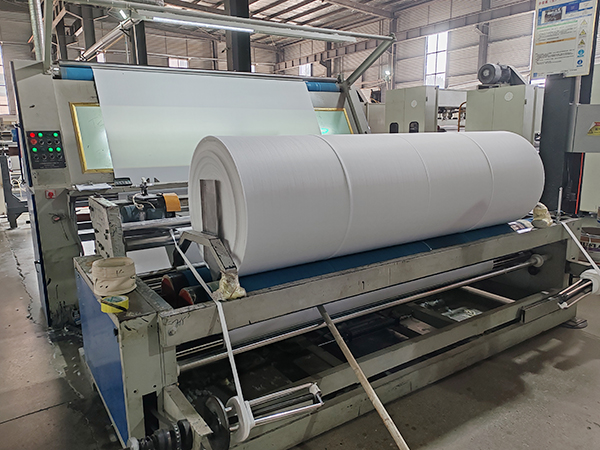
Manufacturing Processes and Fiber Bonding Technologies
The performance characteristics of Non-woven Filter Cloth derive directly from manufacturing processes that determine fiber orientation, bonding methods, and pore structure. Needle punching, thermal bonding, chemical bonding, and spunbond technologies create distinct media properties suitable for different filtration applications. Selecting appropriate Non-woven Filter Cloth requires understanding how manufacturing methods affect filtration efficiency, permeability, and mechanical strength.
Advanced manufacturing techniques enable Non-woven Filter Cloth producers to engineer specific performance characteristics into filtration media. Gradient density structures, multilayer composites, and surface treatments create media that combine high efficiency with low pressure drop. These engineered solutions demonstrate how Non-woven Filter Cloth technology continues advancing to meet evolving filtration challenges in demanding applications.
Air Filtration Applications and Efficiency Ratings
Non-woven Filter Cloth dominates air filtration markets because of its high particle capture efficiency, low pressure drop, and configurable thickness that adapts to various HVAC and industrial air handling systems. MERV ratings from MERV 8 to MERV 16 are achievable with optimized fiber denier, basis weight, and bonding processes. The versatility of Non-woven Filter Cloth makes it suitable for applications ranging from residential HVAC to HEPA-grade cleanroom filtration.
Electrostatic charging enhances Non-woven Filter Cloth performance by adding dielectric attraction to mechanical filtration mechanisms. Electret treatments impart permanent electrostatic charges that capture sub-micron particles with minimal pressure drop penalty. This technology enables Non-woven Filter Cloth to achieve higher efficiency ratings while maintaining energy-efficient operation in air handling systems.
Liquid Filtration Mechanisms and Applications
Liquid filtration with Non-woven Filter Cloth employs depth filtration mechanisms where particles penetrate into media structure and become trapped within fiber networks. This depth filtration capability provides higher dirt-holding capacity compared to surface filtration mechanisms employed by woven screens or membranes. The depth filtration advantage makes Non-woven Filter Cloth cost-effective for applications with high solids loading rates.
Chemical compatibility considerations significantly affect Non-woven Filter Cloth selection for liquid filtration applications. Polypropylene, polyester, nylon, and specialty polymer non-wovens each offer distinct chemical resistance profiles that must match process fluid chemistry. Chemical resistance guides from Non-woven Filter Cloth manufacturers provide essential data for specifying media that withstands process conditions without degradation.
Pore Size Distribution and Filtration Efficiency
Understanding pore size distribution in Non-woven Filter Cloth helps predict filtration performance and select appropriate media for target particle removal. Unlike woven filters with relatively uniform pore sizes, non-wovens exhibit broad pore size distributions that affect particle capture efficiency across different size ranges. Bubble point testing, porometry, and capillary flow porometry characterize Non-woven Filter Cloth pore structure to predict filtration performance.
Filtration efficiency testing validates Non-woven Filter Cloth performance under actual operating conditions that simulate real-world applications. Challenge testing with standardized particles, multi-pass efficiency measurements, and dirt-holding capacity tests provide quantitative performance data. Specify Non-woven Filter Cloth based on tested performance rather than theoretical calculations to ensure actual results match expectations.
Permeability and Pressure Drop Characteristics
Air permeability directly affects Non-woven Filter Cloth performance in both air and liquid filtration applications. Higher permeability reduces energy consumption in air systems and increases flow rates in liquid systems, but may compromise filtration efficiency. Balancing permeability with efficiency requirements demands understanding application priorities and selecting Non-woven Filter Cloth that optimizes both parameters for specific operating conditions.
Pressure drop across Non-woven Filter Cloth increases as particles load into media structure, eventually requiring cleaning or replacement. Monitoring pressure drop trends provides early warning of media loading and predicts remaining service life. Understanding pressure drop characteristics enables proactive maintenance that prevents system overload and ensures continuous filtration performance from Non-woven Filter Cloth installations.
Mechanical Strength and Durability Considerations
Tensile strength, tear resistance, and burst pressure ratings determine Non-woven Filter Cloth suitability for demanding applications with high differential pressures or aggressive cleaning methods. Calendaring, needle punching density, and binder content affect mechanical properties that must match application requirements. Specify Non-woven Filter Cloth with mechanical properties that exceed expected operating stresses to ensure reliable service life.
Abrasion resistance becomes critical for Non-woven Filter Cloth in applications with high-velocity flows or pulsed cleaning systems that flex media repeatedly. Fatigue failure from cyclic loading can cause premature media degradation that compromises filtration efficiency. Selecting Non-woven Filter Cloth with demonstrated abrasion resistance and fatigue life ensures durable performance in challenging operating environments.
Cleaning and Regeneration Methods
Cleanable Non-woven Filter Cloth designs enable multiple use cycles that reduce operating costs compared to disposable media. Backwashing, ultrasonic cleaning, and chemical regeneration restore permeability and filtration efficiency when media structure permits. Not all non-woven media are cleanable, so specify Non-woven Filter Cloth with cleaning compatibility for applications where regeneration provides economic advantages.
Disposable Non-woven Filter Cloth simplifies maintenance in applications where cleaning proves impractical or where contamination levels necessitate frequent replacement. Cost comparisons between disposable and cleanable media should consider labor costs, downtime, disposal costs, and performance consistency. Many applications find that disposable Non-woven Filter Cloth delivers lower total cost despite higher recurring media expenses.
Making Informed Non-woven Filter Cloth Selections
Selecting optimal Non-woven Filter Cloth requires evaluating multiple performance parameters against application requirements and constraints. Filtration efficiency, permeability, chemical compatibility, mechanical strength, and cost all factor into selection decisions. Collaborate with experienced filtration engineers who understand how these parameters interact to recommend Non-woven Filter Cloth solutions that deliver value and performance.
Remember that Non-woven Filter Cloth technology continues advancing through materials science innovations, manufacturing process improvements, and application engineering insights. Stay informed about new developments that may enhance your filtration system performance or reduce operating costs. Your proactive approach to Non-woven Filter Cloth selection and optimization delivers long-term benefits through improved efficiency, reduced maintenance, and enhanced system reliability.
References
American Society of Heating, Refrigerating and Air-Conditioning Engineers. (2020). ASHRAE Standard 52.2-2020 - Method of testing general ventilation air-cleaning devices. ASHRAE Publications.
International Organization for Standardization. (2019). ISO 16890:2016 - Air filters for general ventilation. ISO Central Secretariat.
American Filtration and Separations Society. (2021). AFS technical proceedings - Nonwoven filtration media technology. AFS Publications.
TAPPI Press. (2020). TAPPI useful methods - Testing of nonwoven materials. TAPPI Technical Publications.
Association of the Nonwoven Fabrics Industry. (2019). INDA/EDANA test methods for nonwoven fabrics. INDA Publications.
 Recommended Products


 Contact Us
—— Hotline:+86 15028642444
—— Email:523474198@qq.com
—— Whatsapp:+8615028642444
—— Address:Longfengdian Village, Waliwang Town, Botou City, Hebei Province


