


NewsDetails
Polyester Filter Cloth for HVAC Systems
author:Yiheng time:2026-06-15 11:25:57 click:187
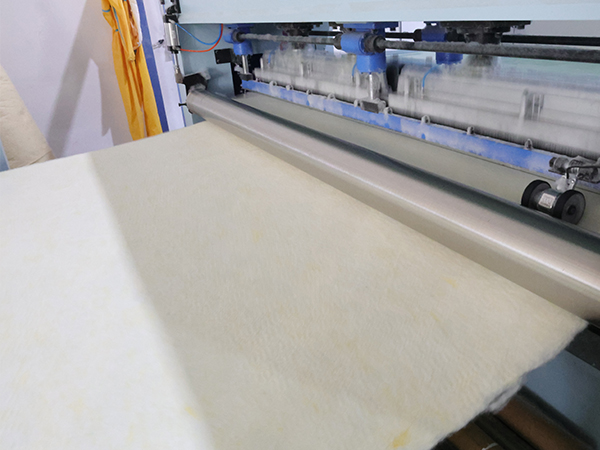
The Role of Polyester Filter Cloth in Modern HVAC Filtration
Heating, ventilation, and air conditioning (HVAC) systems are the lungs of commercial and industrial buildings. The filtration media inside these systems determines both indoor air quality (IAQ) and energy efficiency. Polyester filter cloth has become the dominant choice for mid-range HVAC filtration due to its balance of performance, durability, and cost-effectiveness.
Unlike disposable fiberglass panels, polyester filter cloth offers consistent filtration efficiency across its service life, resists moisture absorption, and can be manufactured in a wide range of thicknesses and densities. The global HVAC air filter market, valued at $6.8 billion in 2023, relies on polyester filter cloth as the primary media for MERV 8–13 rated filters.
Key Advantages of Polyester Filter Cloth in HVAC Applications
Polyester filter cloth outperforms alternative media in several critical dimensions:
Moisture resistance — Polyester absorbs less than 0.4% moisture by weight, preventing microbial growth and maintaining filtration efficiency in humid environments
Chemical stability — Resistant to common HVAC chemicals, cleaning agents, and mild acid/alkaline exposure
Thermal stability — Continuous operation up to 135°C, suitable for heat recovery systems and economizer modes
Customizable density — Available from 150 g/m² pre-filter media to 600 g/m² high-efficiency grades
Washability — Certain grades support 3–5 cleaning cycles, reducing replacement costs by up to 40%
MERV Ratings and Polyester Filter Cloth Grades
Understanding the relationship between polyester filter cloth specifications and MERV (Minimum Efficiency Reporting Value) ratings is essential for HVAC system design:
MERV 8 — Single-layer needled felt, 200–300 g/m²; captures 70–85% of 3–10 μm particles; ideal for pre-filtration
MERV 10–11 — Multi-layer graduated density felt, 350–450 g/m²; captures 65–80% of 1–3 μm particles; standard commercial grade
MERV 13 — Electrostatically charged polyester filter cloth, 400–550 g/m²; captures 90%+ of 0.3–1 μm particles; healthcare and cleanroom pre-filtration
Graduated-density polyester filter cloth — where the upstream layer is more open and the downstream layer is denser — provides lower initial pressure drop while maintaining target efficiency, a critical factor in energy-conscious HVAC design.
Polyester Filter Cloth vs. Alternative HVAC Filtration Media
When selecting HVAC filtration media, polyester filter cloth competes with fiberglass, cotton/synthetic blends, and microglass:
vs. Fiberglass — Polyester offers 2–3× the service life, no fiber shedding, and better moisture performance; fiberglass costs 30–40% less but requires more frequent replacement
vs. Cotton blends — Polyester resists microbial growth and maintains efficiency in humid conditions; cotton absorbs moisture and promotes mold
vs. Microglass/HEPA media — Polyester is far more durable and cost-effective for MERV 8–13; microglass excels at HEPA/ULPA levels but is fragile and expensive
For the majority of commercial HVAC systems operating in the MERV 8–13 range, polyester filter cloth delivers the best total cost of ownership.
Energy Impact: How Polyester Filter Cloth Affects HVAC Operating Costs
Air filter pressure drop is one of the largest controllable energy costs in HVAC operations. ASHRAE estimates that filtration accounts for 10–15% of total HVAC fan energy. Polyester filter cloth directly impacts this equation:
Initial pressure drop for MERV 11 polyester media: typically 50–80 Pa at 2.5 m/s face velocity
Lowest pressure drop achieved through graduated-density construction and optimized fiber diameter (15–30 denier)
Stable pressure drop curve — polyester filter cloth maintains consistent resistance as it loads, unlike fiberglass which spikes sharply near end-of-life
In a 100,000 CFM air handling unit, reducing pressure drop by just 25 Pa through optimized polyester filter cloth selection saves approximately $1,800 per year in fan energy at $0.10/kWh.
Manufacturing Processes and Quality Indicators
The performance of polyester filter cloth depends heavily on its manufacturing process:
Needle punching — The most common method; creates 3D fiber structure with controlled density and permeability. Key quality metrics: punch density (needles/cm²), penetration depth, and loft retention
Hydroentangling (spunlace) — Uses high-pressure water jets to entangle fibers; produces smoother surface and more uniform pore structure for consistent filtration
Thermal bonding — Low-melt fibers create structural integrity without binders; ideal for clean environments where chemical outgassing is a concern
Electrostatic charging — Post-treatment that enhances capture of sub-micron particles without increasing density or pressure drop
Buyers should request test reports for pressure drop, efficiency (ASHRAE 52.2), and dust holding capacity before committing to a polyester filter cloth supplier.
Installation and Replacement Best Practices
Maximizing the value of polyester filter cloth in HVAC systems requires proper installation and changeout protocols:
Ensure correct media orientation — the open (upstream) side faces incoming air in graduated-density constructions
Seal all edges properly; bypass leakage can reduce effective filtration efficiency by 15–30%
Monitor pressure drop across filter banks; change media at 2× initial resistance or manufacturer-recommended terminal pressure
In high-humidity environments, inspect for moisture accumulation and microbial growth quarterly
For washable polyester filter cloth, follow manufacturer cleaning procedures to avoid fiber damage and efficiency loss
FAQ
What MERV rating should I specify for polyester filter cloth in office buildings?
ASHRAE Standard 62.1 recommends a minimum of MERV 11 for general commercial office buildings. Polyester filter cloth at 350–450 g/m² with graduated density reliably achieves MERV 11 performance with manageable pressure drop.
How often should polyester filter cloth be replaced in HVAC systems?
Typical service life ranges from 3–6 months for MERV 8–11 polyester filter cloth in standard commercial applications. High-dust environments or 24/7 operation may require quarterly changes. Always base replacement on pressure drop monitoring rather than fixed schedules.
Can polyester filter cloth be used in cleanroom HVAC pre-filtration?
Yes. Electrostatically charged polyester filter cloth rated MERV 13 or higher is widely used as pre-filtration upstream of HEPA filters in ISO 5–8 cleanrooms, extending HEPA life by capturing the majority of larger particles.
Is polyester filter cloth recyclable?
Polyester is technically recyclable, and some manufacturers offer take-back programs. However, contaminated polyester filter cloth from HVAC applications is typically classified as non-hazardous waste and disposed of in landfill. Emerging thermal recycling processes are making end-of-life recovery more feasible.
Conclusion
Polyester filter cloth remains the most versatile and cost-effective filtration medium for HVAC systems operating in the MERV 8–13 range. Its moisture resistance, customizable density, and stable pressure drop characteristics make it ideal for commercial, industrial, and institutional applications. By selecting the appropriate grade, monitoring pressure drop, and following proper installation protocols, facility managers can optimize both indoor air quality and energy costs. As building codes increasingly mandate higher filtration efficiency, polyester filter cloth — particularly electrostatically enhanced and graduated-density variants — will continue to be the backbone of HVAC filtration.
References
ASHRAE. (2022). Standard 52.2: Method of Testing General Ventilation Air-Cleaning Devices for Removal Efficiency by Particle Size. American Society of Heating, Refrigerating and Air-Conditioning Engineers.
ASHRAE. (2022). Standard 62.1: Ventilation and Acceptable Indoor Air Quality in Buildings. ASHRAE.
Zhang, Y. et al. (2020). "Electrostatically Enhanced Nonwoven Filter Media for HVAC Applications: Performance and Durability." Building and Environment, 176, 106842.
Fisk, W. J. (2017). "Health Benefits of Particle Filtration." Indoor Air, 27(6), 1099–1108.
Montgomery, J. F. et al. (2015). "Impact of Air Filter Pressure Drop on HVAC Energy Consumption." ASHRAE Transactions, 121, 1–9.
 Recommended Products


 Contact Us
—— Hotline:+86 15028642444
—— Email:523474198@qq.com
—— Whatsapp:+8615028642444
—— Address:Longfengdian Village, Waliwang Town, Botou City, Hebei Province


