


NewsDetails
PP Filter Cloth for Air & Water: A Technical Guide to Polypropylene Filtration Media
author:Yiheng time:2026-06-18 14:36:46 click:78
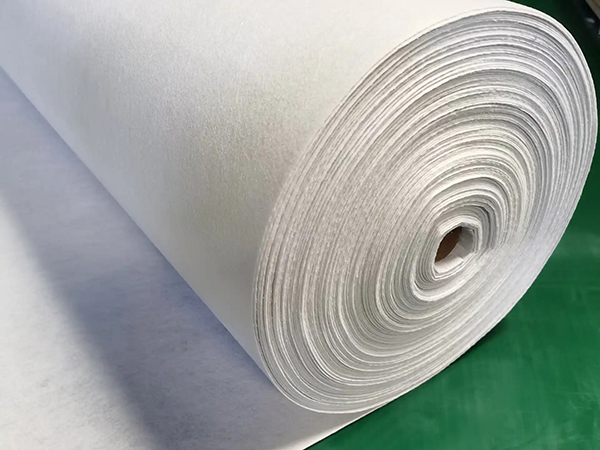
Understanding Polypropylene (PP) Filter Cloth in Industrial Filtration
Polypropylene (PP) filter cloth is one of the most widely used filtration media across both air and water treatment applications. Its unique combination of chemical inertness, hydrophobic properties, and cost efficiency makes it indispensable in industries ranging from chemical processing to municipal wastewater treatment. PP filter cloth accounts for approximately 35% of all industrial filter fabric consumption globally, reflecting its versatility across diverse operating conditions.
The inherent hydrophobicity of polypropylene — it absorbs virtually no water — gives PP filter cloth a decisive advantage in liquid filtration applications where moisture resistance and chemical compatibility are paramount.
Chemical and Physical Properties That Define PP Filter Cloth Performance
The selection of PP filter cloth begins with understanding its material properties:
Chemical resistance — Excellent resistance to acids, alkalis, and organic solvents across a pH range of 1–14; one of the broadest chemical compatibility profiles among industrial fibers
Hydrophobicity — Moisture absorption below 0.01%, making it ideal for liquid filtration where water retention would compromise performance
Operating temperature — Continuous service up to 90°C; suitable for most ambient and moderately heated filtration processes
Density — At 0.91 g/cm³, polypropylene is the lightest commercial fiber, reducing weight load on filter structures
UV stability — Limited without stabilizers; outdoor applications require UV-treated or carbon-black-loaded PP filter cloth
These properties make PP filter cloth the default choice where chemical aggressiveness eliminates polyester, nylon, and cotton alternatives.
PP Filter Cloth in Water and Wastewater Treatment
Water treatment is the largest application segment for PP filter cloth. Its role spans multiple process stages:
Pressure filtration — PP filter cloth in plate-and-frame and recessed-plate filter presses for sludge dewatering, achieving cake solids of 25–45% depending on feed characteristics
Rotary vacuum filtration — Woven PP filter cloth on drum filters for mineral processing and chemical precipitation
Belt filtration — Continuous belt press cloth for municipal and industrial wastewater sludge, with tensile strength exceeding 3000 N/5cm required for high-tension applications
Sand filter covers — PP filter cloth as underdrain media in rapid sand filters for potable water treatment
In municipal wastewater plants, PP filter cloth filter press media typically processes 15–25 kg/m² per cycle with solids recovery exceeding 90%. The non-absorbent nature of polypropylene ensures easy cake release and minimal blinding.
PP Filter Cloth in Air Filtration and Dust Collection
While less dominant than in liquid filtration, PP filter cloth plays important roles in air treatment:
Chemical fume scrubbers — PP filter cloth mist eliminators in acid gas scrubbing systems resist corrosion from HCl, HF, and SO₂
Industrial ventilation — Needled PP filter cloth for corrosive dust environments where polyester or aramid would degrade
HVAC pre-filtration — Cost-effective MERV 6–8 pre-filter media in chemical plants and laboratories
Wet scrubber mist pads — Knitted or woven PP filter cloth that captures entrained droplets while resisting chemical attack
In galvanizing and pickling operations, PP filter cloth mist eliminators achieve 90% removal of acid mist at face velocities of 2.5–3.5 m/s, outperforming PVC and FRP alternatives in both efficiency and longevity.
Woven vs. Needle-Felt PP Filter Cloth: Selection Criteria
PP filter cloth is manufactured in two fundamental constructions, each suited to different applications:
Woven PP filter cloth — Produced on looms with controlled pore size and high tensile strength. Ideal for filter presses, centrifuges, and applications requiring precise pore openings (10–200 μm). Monofilament woven PP filter cloth offers the best cake release and cleanability.
Needle-felt PP filter cloth — Three-dimensional random fiber structure providing depth filtration. Best for baghouse dust collectors, cartridge filters, and applications requiring high dust holding capacity. Available in weights from 300 to 800 g/m².
The selection between woven and needle-felt PP filter cloth depends primarily on the filtration mechanism: surface filtration favors woven constructions, while depth filtration benefits from needled felt.
Surface Treatment Options for Enhanced Performance
Base PP filter cloth can be enhanced through several surface treatments:
Calendering — Heat-pressing the surface to reduce pore size and improve cake release; standard for filter press applications
Singeing — Burning off surface fibers for smoother cake release; common in woven PP filter cloth for slurry filtration
PTFE membrane lamination — Adds sub-micron filtration capability for air applications; increases efficiency to 99.90% at 0.3 μm
Anti-static treatment — Carbon fiber integration or topical antistatic agents for combustible dust applications
Hydrophilic treatment — Modifies the inherently hydrophobic surface for specialized water filtration where wetting is desired
Calendered PP filter cloth is the most common specification for filter press applications, with 70% of all filter press cloth sold globally featuring some form of surface finishing.
Cost Analysis: PP Filter Cloth Total Cost of Ownership
PP filter cloth offers compelling economics compared to alternative materials:
Material cost is 20–30% lower than polyester and 50–70% lower than PTFE or PPS
Chemical resistance eliminates the need for protective coatings or pre-treatment systems
Light weight reduces shipping costs and structural requirements for filter housings
Non-stick surface minimizes cleaning time and downtime during changeovers
In a typical filter press operation processing 50 tons of sludge per day, PP filter cloth achieves a total cost of ownership 25–35% lower than polyester alternatives when accounting for cloth life, cleaning labor, and downtime.
FAQ
What temperature limits apply to PP filter cloth?
PP filter cloth is rated for continuous operation up to 90°C and short-term excursions to 100°C. Above this range, polyester or PPS alternatives should be considered. The melting point of polypropylene is approximately 165°C.
Can PP filter cloth handle strong acids and alkalis simultaneously?
Yes. PP filter cloth resists virtually all acids and alkalis at ambient temperatures, including concentrated sulfuric acid, hydrochloric acid, and sodium hydroxide. This broad-spectrum chemical resistance is its primary advantage over polyester and nylon.
How does PP filter cloth compare to polyester for sludge dewatering?
PP filter cloth offers better cake release due to its hydrophobic surface and lower moisture absorption. However, polyester provides higher tensile strength and better temperature resistance. For most municipal sludge applications at ambient temperature, PP filter cloth is preferred for its non-stick properties.
Is PP filter cloth suitable for food-grade filtration?
Yes, when manufactured from FDA-compliant polypropylene resin. PP filter cloth is widely used in food processing for edible oil filtration, starch recovery, and beverage clarification. Ensure the specific grade carries FDA 21 CFR 177.1520 compliance certification.
What micron ratings are available for woven PP filter cloth?
Woven PP filter cloth is available in nominal ratings from 10 μm to 200 μm for monofilament constructions, and from 1 μm to 50 μm for multifilament weaves. Needle-felt versions provide nominal ratings from 5 μm to 100 μm depending on weight and density.
Conclusion
Polypropylene (PP) filter cloth stands as the most chemically versatile and cost-effective filtration medium for applications spanning air and water treatment. Its unmatched resistance to acids, alkalis, and organic solvents — combined with inherent hydrophobicity and low cost — makes it the rational choice for chemical processing, wastewater treatment, and corrosive dust collection. By matching the construction type (woven vs. needle-felt), surface treatment, and micron rating to the specific application, procurement teams can achieve optimal filtration performance with the lowest total cost of ownership. As environmental regulations tighten worldwide, demand for high-performance PP filter cloth will continue to grow across both established and emerging industrial sectors.
References
Purchas, D. B. & Sutherland, K. (2002). Handbook of Filter Media. 2nd ed. Elsevier Advanced Technology.
Wakeman, R. J. (2007). "Separation Technologies for Sludge Dewatering." Journal of Hazardous Materials, 144(3), 614–620.
Chen, X. & Li, Y. (2019). "Polypropylene Nonwoven Filter Media: Structure–Property Relationships for Liquid Filtration." Textile Research Journal, 89(19–20), 4012–4025.
U.S. FDA. (2023). 21 CFR 177.1520: Olefin Polymers. Code of Federal Regulations, Title 21, Part 177.
Huttinger, K. J. & Mersmann, A. (2018). "Filtration Media for Acid Gas Scrubbing: Material Selection Guidelines." Chemical Engineering & Technology, 41(5), 892–900.
 Recommended Products


 Contact Us
—— Hotline:+86 15028642444
—— Email:523474198@qq.com
—— Whatsapp:+8615028642444
—— Address:Longfengdian Village, Waliwang Town, Botou City, Hebei Province


